CHICAGO — For today’s wash-dry-fold (WDF) operators, the challenge often isn’t convincing consumers that laundry service is useful. It’s convincing busy people that outsourcing laundry is worth prioritizing among the many other convenience services competing for their dollars.
That reality is reshaping how laundromat operators market WDF and pickup-and-delivery services. Increasingly, successful operators are focusing less on simply advertising that they offer WDF and more on selling what the service truly provides: time, convenience, trust, and less stress.
Operators who spoke to American Coin-Op say modern WDF marketing has evolved well beyond flyers, storefront signs and price promotions. Google search visibility, social media, automated customer communication and targeted digital messaging are now central parts of attracting and retaining customers.
At the same time, technology and operational consistency have become just as important as marketing itself.
PROMOTIONS STILL MATTER
Although operators emphasize convenience and trust, pricing and promotions still play an important role in getting first-time customers to try WDF.
Emma Evans, owner of Top Coin Laundry, says affordability messaging performs particularly well in Chicago’s competitive urban market: “We have found success leading with affordability. Prices in our area vary considerably, and we firmly believe that at our current prices, we are highly competitive.”
Sam Levari, owner of Erica’s Laundry in Tarzana, California, also says affordability messaging has been effective for his store. He uses introductory discounts to encourage trial.
“We offer a coupon for first tryout,” he says.
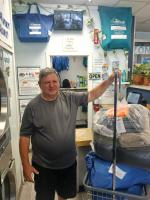
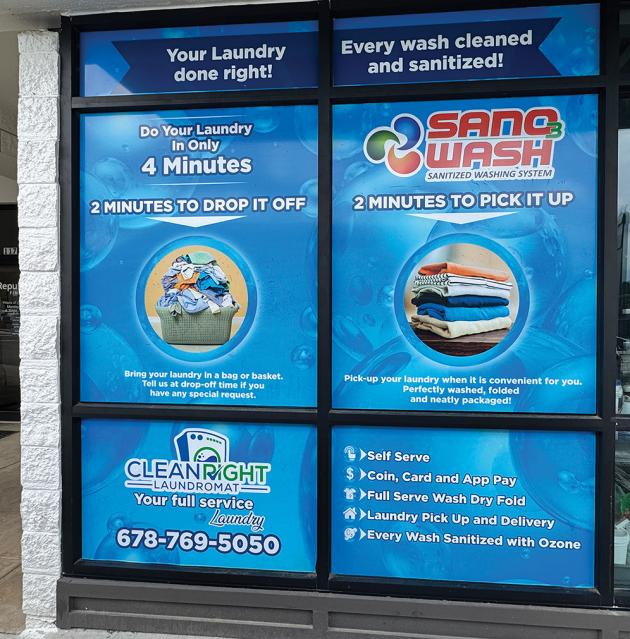
Charlie Whigham, owner of Clean Right Laundromat in Gainesville, Georgia, similarly uses introductory offers to encourage customers to sample the service.
“You might think that’s too cheap,” he says regarding discounted comforter service. “But no, because I just got her started with me.”
Converting one-time customers into repeat users is the real challenge.
“When you get that first customer, that’s gold,” Whigham says. “You have to really work hard to get them to order a second time.”
SuperSudz, which operates three stores on Long Island, New York, sends follow-up discounts to customers after initial orders. “We’ll send numerous follow-ups a set amount of times if they don’t bring any orders,” says owner Steve Levine.
Levari uses recurring text-message campaigns: “We send at least twice a month a text message, whether it’s a promotion or some other kind of message. That is to remind the people that we exist.”
Promotions are often tied to seasonal laundry needs.
“Every month has a theme and a promotion,” Levari says of his program. “There was National Laundry Day (in April), so we promoted blankets. (In May) we promoted carpets. Next, it’s going to be camping gear.”
GROWTH CREATES OPERATIONAL PRESSURE
As WDF volume grows, maintaining service quality can become increasingly challenging.
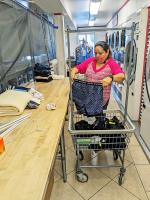
“Rapid growth of our wash-and-fold service forced us to adapt our operations,” Evans says. Top Coin Laundry eventually moved from same-day service to a 24-hour turnaround window.
“We also introduced a new ‘flex shift.’ When wash-and-fold volume spikes, our manager brings in an additional team member for a targeted three-hour window.”
Levine says SuperSudz occasionally shifts orders between stores to balance workloads. “Our stores are relatively near each other, so we’ll drive a few orders over to another store and pick up some slack.”
A CHANGING CUSTOMER MINDSET
Ultimately, operators believe consumer attitudes toward laundry service are evolving.
Customers increasingly view WDF the same way they view food delivery, house cleaning or other outsourced convenience services.
“We really lean into the idea of giving them their ‘time back,’” Evans says. “When you explain that our service takes a huge, recurring chore off their plate and lessens their mental load, it suddenly doesn’t seem like a premium — it feels like an investment in their week.”
Whigham says that emotional shift often happens when customers recognize how much time laundry consumes.
“They’re trying to figure out a way to enjoy their life and limit tedious tasks,” he says.
For operators hoping to grow WDF revenue, Evans believes the path forward is clear: “Technology is absolutely key. If you want to grow, you have to move away from antiquated pen-and-paper tracking and modernize your operations.”
Levine offers a simpler but equally direct recommendation.
“Spend a lot of money advertising,” he says, “and invest even more on training and maintaining the best staff possible so they will do the best they can to keep your customers happy with your service.”
Miss an earlier part of this article? You can read it here: Part 1 — Part 2

Have a question or comment? E-mail our editor Bruce Beggs at [email protected].