CHICAGO — For today’s wash-dry-fold (WDF) operators, the challenge often isn’t convincing consumers that laundry service is useful. It’s convincing busy people that outsourcing laundry is worth prioritizing among the many other convenience services competing for their dollars.
That reality is reshaping how laundromat operators market WDF and pickup-and-delivery services. Increasingly, successful operators are focusing less on simply advertising that they offer WDF and more on selling what the service truly provides: time, convenience, trust, and less stress.
Operators who spoke to American Coin-Op say modern WDF marketing has evolved well beyond flyers, storefront signs and price promotions. Google search visibility, social media, automated customer communication and targeted digital messaging are now central parts of attracting and retaining customers.
At the same time, technology and operational consistency have become just as important as marketing itself.
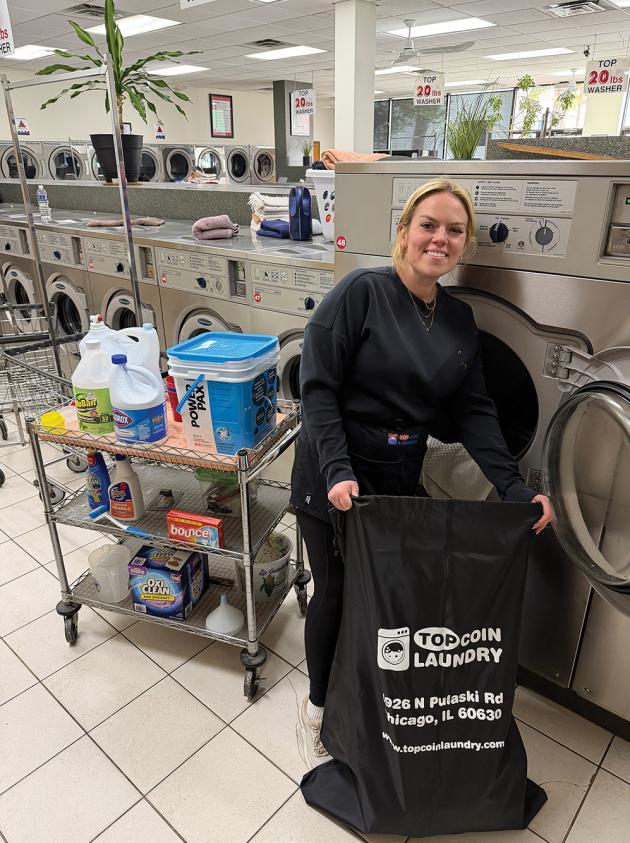
“You need the operational capacity to back up your marketing,” says Emma Evans, owner of Top Coin Laundry in the Albany Park neighborhood of Chicago.
For many operators, that means modernizing systems, improving communication and carefully managing customer expectations while positioning WDF as an accessible convenience rather than a luxury.
SELLING TIME INSTEAD OF LAUNDRY
One theme emerged repeatedly among operators interviewed: successful WDF marketing is built around time savings.
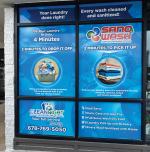
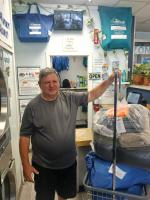
Charlie Whigham, owner of Clean Right Laundromat in Gainesville, Georgia, says his most successful customers are busy families, working professionals and people juggling packed schedules.
“They want somebody to keep the house clean once or twice a week,” he says. “They want to get the laundry done. They’re so busy. I think it’s just services that they’re looking for so they can spend more quality time.”
Whigham says many customers initially start small — perhaps by dropping off comforters or children’s clothing — before eventually transitioning larger portions of their household laundry to the service.
“A lot of young couples, instead of buying DoorDash dinner one night, they’d rather cook and have the laundry done,” he says.
Sam Levari, owner of Erica’s Laundry in Tarzana, California, says his marketing increasingly mirrors the messaging used by app-based convenience companies.
“Our target is more trying to copy DoorDash and Uber Eats, which means convenience — simply convenience,” he says. “You pay more for convenience. You pay more when you go to 7-Eleven, you pay more when you go to a restaurant, you pay more when you order DoorDash, so you pay more when you do laundry.”
Levari says convenience today extends beyond simply washing clothes.
“Convenience to my customers is them being able to drop the laundry and pick it up the next day,” he says. “I also give them the option to drop it and I will deliver it back, and of course there is the option of full pickup and delivery.”
At SuperSudz, which operates three stores on Long Island, New York, owner Steve Levine says customer demographics have broadened over time.
“We originally thought more affluent areas would be better for wash and fold,” Levine says. “But through the years, we have noticed that many working-class, blue-collar people use this service because they simply do not have time to do their wash themselves.”
That realization changed how Levine viewed his customer base.
“A lot of the people may make less but they’re working a lot more,” he says. “I guess they just don’t have time and they would rather pay somebody to do their wash.”
Evans has observed a similar evolution at Top Coin Laundry: “We expected families to be our primary target. But more surprisingly to us … we’ve found a very strong demographic in young, single men.”
Many of those customers work in the gig economy, Evans says, and view WDF as a productivity tool.
“Many of these men are also gig economy workers and have found they can earn more while working during the one to two hours it normally takes to complete their own self-service wash,” she says.
Check back Thursday for Part 2: Building trust through professionalism, and the most dominant of marketing channels

Have a question or comment? E-mail our editor Bruce Beggs at [email protected].