CHICAGO — Walk into a laundromat and what do you notice first? The brightness of the lighting. Whether the floors are clean. The smell. Whether anyone behind the counter looks up. Long before a single machine runs, a customer has already formed an impression — and that impression is your brand.
This is the reality of branding touchpoints. They’re the sum of every encounter a customer has with your business, from a 2 a.m. Google search to a Thursday afternoon drop-off, from a reply to a one-star review to the font on your loyalty card.
And for the neighborhood laundry business where the same faces come through the door week after week, those touchpoints aren’t incidental. They’re the business.
American Coin-Op contacted a trio of marketing professionals who work closely with laundry operators and asked them to share what branding touchpoints really mean, why they matter more than most owners realize, and what practical steps operators can take right now to strengthen every link in their chain.
In Part 1, they defined “touchpoint” and emphasized repeat customers as the stakes for branding a business the right way. Part 2 covered the importance of customer service and how a laundry’s physical space speaks first. Part 3 explored the digital touchpoint hierarchy and how one’s online reputation is a revenue driver. Let’s conclude:
Consistency: The Foundation that Multiplies Every Other Investment
All of the experts circle back to a single theme when asked what separates laundromats that build strong brands from those that struggle to hold customers: consistency.
“Laundromats ensure consistency by building clear standards and applying them across every part of the business,” says Charles Measley, co-founder of Suds Digital, a marketing agency based in Eatontown, New Jersey. “That means having aligned branding, consistent messaging, defined processes, and properly trained staff who deliver the same experience every time. When everything matches — from your online presence to your in-store experience — the customer knows exactly what to expect.”
Dennis Diaz, president of the New York City-based digital marketing agency Spynr, frames consistency as a cultural achievement, not a checklist item. He uses the analogy of a kitchen: The best recipe in the world is worthless if every chef cooks it differently.
“Standard operating procedures keep everything aligned,” he says. “And here’s the key — make it fun. Gamify it. Recognize great moments. Get feedback from customers regularly. When your team is engaged and your feedback loop is active, consistency becomes part of the culture.”
He points to small details as harbingers of brand character. An out-of-order sign, he notes, is a touchpoint. It can be purely functional, or it can say something like, ‘Oops, we’re giving this machine a little TLC — try another one!’ “That small touch adds personality and shows thoughtfulness,” he says.
For Brett Lyon, president of Cincinnati, Ohio-based LaundroBoost Marketing, consistency has a direct and measurable financial value.
“When someone clicks a Google Ad promising ‘professional wash-dry-fold service’ and lands on a website that reinforces that exact message with professional photos and clear pricing, they convert,” he says. “When there’s a disconnect, they bounce.”
A modern ad leading to an outdated website, or a premium website leading to a neglected store, creates friction, Lyon believes.
“It makes people wonder: If they can’t keep their branding straight, what else is falling through the cracks? That consistency is the foundation.”
Low-Cost Moves with High-Impact Returns
Not every improvement to a laundromat’s touchpoint ecosystem requires a major capital outlay. The experts identify a range of changes — some entirely free — that can meaningfully shift how customers perceive a business.
“One of the biggest, lowest-cost opportunities is optimizing your free Google Business listing,” Measley says. “Most laundromat owners either don’t have it verified or barely use it, but with a little time invested, it can completely change how your store is perceived. Adding real photos, keeping information accurate, posting updates, and consistently generating reviews makes your business stand out instantly.
“It’s simple, it’s free, and it’s often the difference between getting the customer or losing them to the place down the street.”
Diaz’s answer is equally direct: Invest in your people before you invest in anything else.
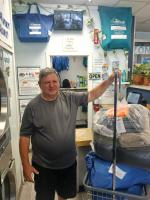
“If I had to pick one, it’s training your people,” he says. “It costs very little, but it changes everything. Teach your team how to greet people, how to help, how to handle issues, and how to make someone’s day just a little easier. Customers may come in for laundry, but they come back for how you made them feel.”
Lyon offers a roadmap tiered by investment level. At the free tier: update Google Business Profile photos quarterly with fresh, well-lit images; respond to every Google review; and train staff on a single consistent greeting.
“Just one consistent, friendly greeting — ‘Hey, welcome in!’ — transforms the customer experience overnight,” he says.
Moving up the ladder, Lyon recommends a professional website (“a modern, mobile-friendly website costs a few hundred dollars and pays for itself by converting searchers into customers”), targeted Google Ads at even a modest monthly budget, and test campaigns on Facebook specifically for wash-dry-fold services.
The return on investment on well-targeted Facebook campaigns is often three to five times, he says.
“The operators who are growing right now aren’t just maintaining their stores. They’re investing in their digital presence and online advertising. The cost of not being visible online is higher than most realize.”
The Brand is the Business
What emerges from these conversations is a portrait of the modern laundry business as a brand ecosystem — a network of moments, interactions, and signals that collectively define what a business means to the people it serves.
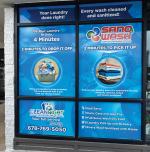
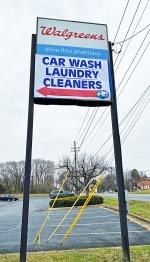
Every machine, every employee, every review response, every photo on your Google profile, every sign in your window is a touchpoint. And every touchpoint is an opportunity.
The businesses that understand this — that treat consistency as a competitive weapon, the physical environment as a marketing asset, and their employees as brand ambassadors — are the ones building the kind of loyalty that no competitor can easily displace.
“Think of it like being a good neighbor,” Diaz says. “If you take pride in your home, care about your street, and treat people well, people notice. Laundromats that put people first don’t just build a brand — they build loyalty.”
For earlier parts of this article: Part 1 — Part 2 — Part 3
Have a question or comment? E-mail our editor Bruce Beggs at [email protected].