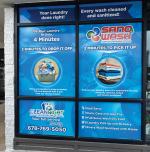
CHICAGO — Walk into a laundromat and what do you notice first? The brightness of the lighting. Whether the floors are clean. The smell. Whether anyone behind the counter looks up. Long before a single machine runs, a customer has already formed an impression — and that impression is your brand.
This is the reality of branding touchpoints. They’re the sum of every encounter a customer has with your business, from a 2 a.m. Google search to a Thursday afternoon drop-off, from a reply to a one-star review to the font on your loyalty card.
And for the neighborhood laundry business where the same faces come through the door week after week, those touchpoints aren’t incidental. They’re the business.
American Coin-Op contacted a trio of marketing professionals who work closely with laundry operators and asked them to share what branding touchpoints really mean, why they matter more than most owners realize, and what practical steps operators can take right now to strengthen every link in their chain.
Defining the Touchpoint: More Than a Logo
Ask a typical laundromat owner what their brand is and they’ll likely point to their sign or business logo. That answer, say the experts, misses the point entirely.
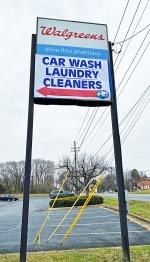
“Branding touchpoints are every interaction a customer has with your business, from finding you online to walking into your store and using your services,” says Charles Measley, co-founder of Suds Digital, a marketing agency based in Eatontown, New Jersey, that works specifically with laundry businesses. “For a laundromat, it’s not just your logo. It’s your signage, cleanliness, layout, online presence, and overall experience. All of it together sets expectations, builds trust, and is what makes someone choose your store and come back.”
Dennis Diaz, president of the New York City-based digital marketing agency Spynr, draws the concept out of the boardroom and into the neighborhood: “I live in a small beach town in Delaware where community is everything. The businesses that last aren’t just selling something — they’re part of the neighborhood. They show up, they give back, and they know what matters to the people around them.”
For Diaz, a touchpoint is less about marketing infrastructure and more about human feeling.
“Branding touchpoints in a laundromat aren’t just logos or colors — they’re the feeling people get every time they interact with you. It’s how your place looks, how it smells, how people are greeted, and whether customers feel like they matter.”
Brett Lyon, president of LaundroBoost Marketing, a Cincinnati, Ohio-based firm focused on digital marketing for the laundry industry, brings a hard-numbers perspective. A single neighborhood laundromat, he asserts, may have more than 50 distinct customer touchpoints — and the majority are now digital.
“Today’s customer journey typically starts with a Google search, moves to your website or social media, then to reviews, and only then to your physical location,” Lyon explains. “Branding is the cumulative experience across dozens of small moments — and increasingly, those moments happen online first.”
Repeat Customers are the Stakes
For businesses like laundromats that depend on a steady local clientele, the management of touchpoints carries a weight that most retail or hospitality businesses never face. A customer who visits 52 times a year isn’t simply a revenue source. They’re a weekly referendum on your brand.
Measley frames it in terms of habit formation: “Branding touchpoints matter more for businesses with repeat, local customers because people aren’t choosing you once, they’re choosing you every week. If your experience is consistent, clean, and recognizable, you become their go-to. If it’s not, you’re replaceable.”
“You don’t go back just for the food — you go back because it feels familiar, consistent, and easy,” Diaz says, using the analogy of a favorite diner. “If one visit feels off, you notice. If it keeps happening, you stop going. For laundromats, every touchpoint is a vote: Do I come back next week, or try somewhere else?”
Lyon puts the financial reality of customer retention in stark terms. Acquiring a new customer, he points out, costs five to seven times more than keeping an existing one.
“Email and text marketing to existing customers, retargeting ads on Facebook, an active Google Business Profile that shows you’re engaged — these digital touchpoints reinforce the relationship between visits,” Lyon says. “One bad experience doesn’t just lose that visit — it can lose that customer for life, plus everyone they tell about it. But one great digital follow-up — a thank-you email, a loyalty reward, a response to their review — can turn a one-time visitor into a regular.”
In Part 2 coming Thursday: Customer service as brand proof, and what your physical space speaks to customers first
Have a question or comment? E-mail our editor Bruce Beggs at [email protected].