
HOUSTON — When you step into one of Rob Maes’ laundromats in this area, the first thing you may notice — aside from the hum of dryers — is that the space feels comfortable, even in the summer heat. That’s no accident.
For Maes, who has been in this business for 16 years and currently serves as president of CLA (formerly the Coin Laundry Association), HVAC — heating, ventilation and air conditioning — is more than just background equipment. It’s a critical piece of the customer experience and a misunderstood aspect of store operation.
“I’m not a technical guy,” Maes admits. “Everything I’ve learned is by hook or by crook, and by talking to a lot of other good people.”
In Part 1, we examined how a laundromat’s HVAC needs differ from those of other commercial buildings, and how to avoid some common HVAC problems. Let’s conclude:
VENTILATION MATTERS — FOR YOUR BOTTOM LINE
Failing to provide proper makeup air won’t just make customers uncomfortable, it can hit your wallet. Without it, dryers take longer to run, utilities usage climbs, and lint builds up faster.
“When we don’t have proper makeup, we get more lint and dust in our laundry,” Maes says. “You’re cleaning that extra lint all the time.”
LEASE EXPECTATIONS AND WHEN TO REPAIR OR REPLACE
Maes urges operators to read their leases carefully. HVAC clauses can be tricky — sometimes the tenant is responsible for maintenance while the landlord owns the equipment. “The lease might say the landlord replaces the unit when it wears out,” Maes says. “But when does a unit wear out? Some landlords will just keep replacing components forever instead of upgrading.”
The decision to repair or replace often comes down to cost and efficiency. If repair expenses start approaching the price of a new unit, or if a major component like a compressor needs replacing, Maes leans toward replacement — especially since newer units are typically more efficient. Always check the lease to see who’s responsible before making the call.
CHOOSING THE RIGHT HVAC PARTNER
Perhaps the most important factor in service provider selection is experience with laundromats. “That probably rules out about 90% of them,” Maes says. “A lot of this is nuance — vent locations, store layout, number of doors. Every laundromat is different.” An HVAC contractor who understands those nuances can help you avoid costly mistakes.
LESSONS LEARNED
Maes is quick to point out that he’s not an HVAC expert, just a store owner who’s learned by doing.
“Everything I’ve learned about HVAC came from being inquisitive and making mistakes,” he says. “I’m just trying to take care of my employees and customers the best way I know how.”
His advice boils down to a few key points:
- Account for dryer heat in system sizing
- Ensure adequate makeup air
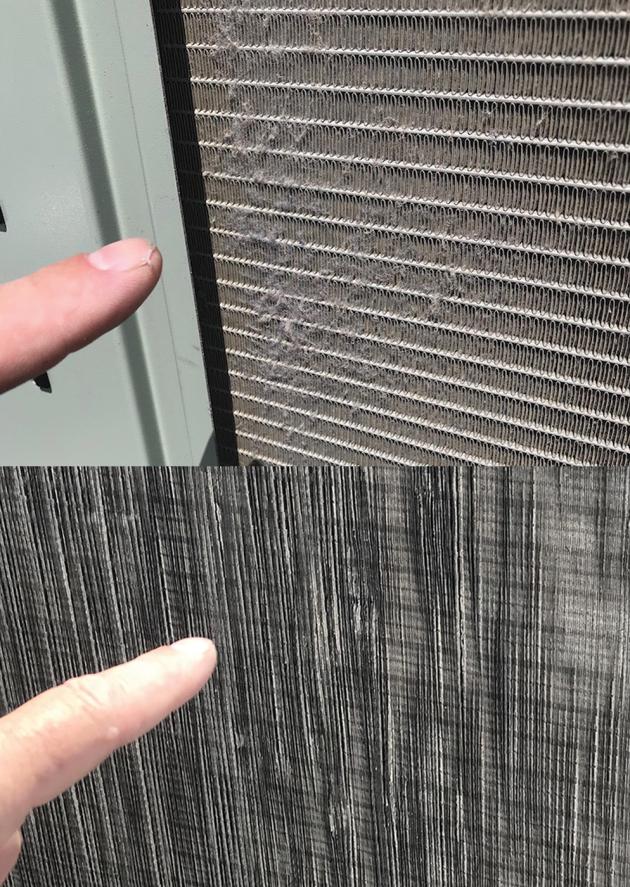
- Keep coils clean and choose durable designs
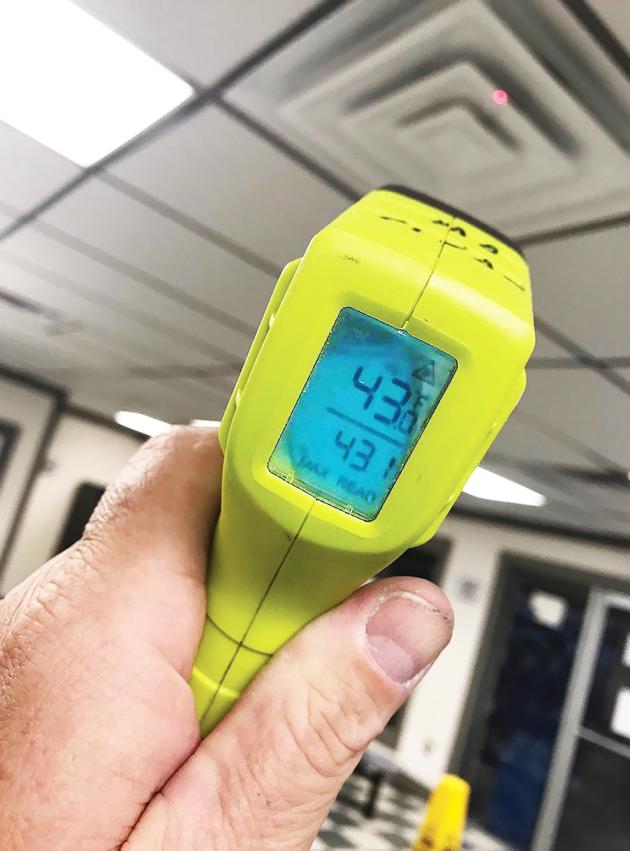
- Monitor temperature differentials to guide filter changes
- Understand your lease obligations
- Work with HVAC providers experienced in laundry environments
In a business where customer comfort directly impacts revenue, the right HVAC approach can mean the difference between a loyal customer base and a sweltering, empty store. Maes’ experience proves that even without a technical background, an engaged, hands-on operator can master the art — and science — of keeping cool.
Miss Part 1? You can read it HERE
Have a question or comment? E-mail our editor Bruce Beggs at [email protected].