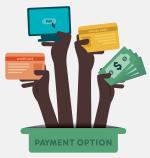
CHICAGO — Payment acceptance is no longer a one-size-fits-all decision for today’s laundromat owner. From fully cashless stores to operations that remain firmly rooted in coins and bills, they’re adapting their approaches based on customer preferences, market demographics and operational priorities.
The following operator snapshots offer a ground-level view of navigating the evolving mix of coin, cash and digital payments — highlighting the real-world trade-offs, benefits and challenges shaping payment strategies today.
Jim Hohnstein, Lafayette, Colorado
Hohnstein has fully embraced cashless payments, making his Econ-O-Wash largely coinless.
Today, about 93% of his self-service revenue comes through digital channels such as mobile app and credit or debit card payments, with only a small portion from cash bills.
He began shifting toward cashless several years ago as more customers adopted app-based payments. “I kept seeing more and more people downloading the app,” he says.
The transition has simplified operations by eliminating coin collection and reducing labor. “I’m an older person, so taking a thousand quarters to the bank was quite a task for me,” he says.
Cashless technology has also eliminated coin jams and provides detailed operational data, enabling him to resolve most of his unattended store’s issues remotely. “It gives me more time away from the laundry because I can solve 95% of issues online,” he says.
Sharon Sager, Sierra Madre, California
Sager has seen her Sierra Madre Laundry shift from a coin-only operation to one that relies largely on cashless payments, citing both customer convenience and operational efficiency.
When she purchased her laundromat in 2016, coins were the only option. She introduced a mobile app within a year, then last year shifted to a store card-based system. Today, roughly three-quarters of purchases are made via store card, with the remainder mobile. Coins are used only at a few ancillary machines, primarily vending and supplies.
“It’s very obvious to me that people … if they can just tap their card and pay for their wash, they’re much happier to do it than having to deal with putting cash into the (changer) to get the coins and so forth.” And she believes that cashless options can encourage customers to spend more during their visits.
Cashless adoption has also streamlined her operations, reducing coin collection and bank trips. “That was literally a huge load off my plate,” she quips.
Johnny Segal, Hoover, Alabama
Segal has owned the fully attended Soap Box Laundromat and Laundry Service for 20 years. “We have been offering cashless payment for about eight years,” he says. “We have always been coinless.”
Customers use a store laundry card — funding with cash bills, credit/debit cards or mobile payments — to start one of 90 machines. Today, about 40% of revenue comes via credit or debit cards, 35% from cash bills and 25% from mobile/app payments.
Segal says eliminating coins has simplified operations and improved security. “Collections, quarter needs and problems go away,” he notes.
Cashless options have also influenced customer behavior. “Customers add quite a bit more value to their cards when they use a cashless payment option,” he says, adding that those patrons also tend to spend more per visit.
He expects payments to continue shifting toward digital channels, though cash will remain part of his mix. “I would never be totally cashless,” Segal says.
Edward Ellis, St. Cloud, Florida
Ellis, who owns 1 Clean Laundry, has steadily expanded cashless payment acceptance while maintaining a hybrid system that accommodates both traditional and digital preferences.
Today, his self-service revenue breaks down to 60% from credit or debit card payments, 39% from cash bills and 1% from coins. Installation of a new store card-based system was pending at the time of this interview, so those numbers could change soon.
When the store opened in 2015, about 75% of customers used coins and 25% used cards, a mix that has gradually shifted toward card-based payments.
Although rising merchant processing fees remain a consideration, Ellis says the operational benefits are significant. “Costs have gone up but not worrying about the change machine running out of quarters is priceless,” he says.
The hybrid system also provides flexibility if a coin slot jams or internet service fails, and he expects continued movement toward cashless while still allowing cash loading. “I hope it makes my travel plans more compatible with store management,” Ellis concludes.
James Radovic, Jupiter, Florida
Radovic takes a balanced approach to payment acceptance, operating coin-dominant Jupiter Laundry while gradually adding a cashless option.
About 80% of his self-service revenue comes from coins, roughly 15% from a mobile payment app, and the remainder from cash bills.
He introduced the app about a year ago to improve security and reduce the need for attendants to repeatedly access cash after discovering a trusted employee had been stealing. What began as a trial quickly gained popularity among customers with bank accounts and smartphones, he says.
The system produces daily deposits directly into the store’s bank account and is expanding across additional machines.
Still, Radovic says coins remain essential for many patrons who rely on cash and may not have access to digital tools, and he expects them to remain the primary payment method for the foreseeable future.
Ray Dunsavage, Edison, New Jersey
The unattended 24-Hour Coin Laundry owned and operated by Dunsavage relies primarily on coin payments while gradually introducing cashless options. About 75% of his store’s self-service revenue comes from coins, with roughly 25% generated through a mobile payment app.
Dunsavage added the app-based system about a year ago to attract customers who expect digital payment choices. “To capture more customers, the newer, younger customers,” he says.
Coins still account for most transactions, though app usage continues to grow.
Because the system operates through a third-party platform, Dunsavage says he has few concerns about security or operational risks. He passes processing fees on to customers.
For now, the technology expands payment options while coins continue to drive most of his business.
Curt Harrington, Winslow, Arizona
Harrington, who owns the partially unattended Sunshine Laundry, relies on traditional payment methods, operating his store on cash and coins. Roughly 90% of self-service revenue comes from bills and about 10% from coins, with no store card, app or other digital payment option offered.
The approach reflects the preferences of his customer base, he says, noting many patrons are more comfortable using cash. “A lot of my customers are older and they don’t get the cool new technology,” he says.
A competing store once installed a card system but later removed it after it failed to gain traction, according to Harrington. “It probably works well in a college town but in this particular area, card systems don’t work here,” he says.
As for adding cashless payment, he cites concerns about processing fees, system reliability, and customer support needs. “It would mean that I’d have to have somebody there (in the store) all the time,” he adds.
After 54 years in the industry, Harrington remains confident that a cash-centered model can still succeed.
Miss an earlier part? You can read here: Part 1 — Part 2 — Part 3

Have a question or comment? E-mail our editor Bruce Beggs at [email protected].